White Cane Day: 5 things to know about white cane etiquette
15 October 2026
Community
Eye Health
Our stories
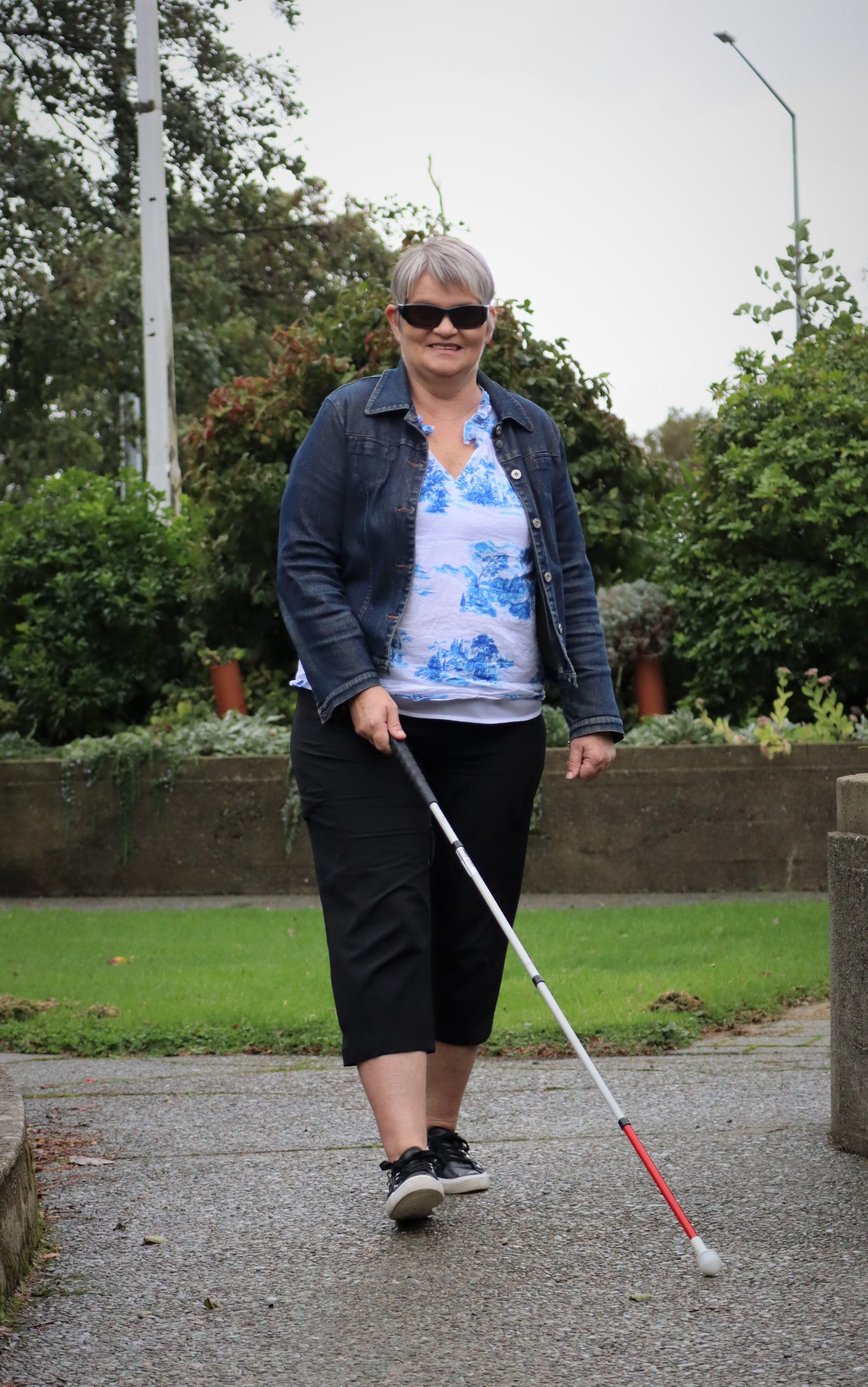
Image Description: A woman wearing sunglasses walks with a white cane and smiles with confidence.
Imagine walking down the street after a storm. Leaves are scattered across the footpath, branches lie in your way, and unexpected obstacles make it harder to get around.
If you have sight, you might spot these hazards ahead and work out how to step around them before you reach them. But what if you couldn’t clearly see what was in front of you?
For people who are blind or have low vision, navigating everyday environments can require different skills and tools. For more than a century, the white cane has been an important mobility aid, helping people detect obstacles and changes in the ground and supporting safer, more independent travel.
But understanding how a white cane works is only part of the picture. Knowing how to respond when you encounter someone using one matters, too.
Every year on 15 October, White Cane Day raises awareness of the white cane and the rights of people who are blind, deafblind or have low vision to travel safely and independently.
At Blind Low Vision NZ, we want to challenge common misconceptions and break down the barriers people can face. This White Cane Day, let’s explore how a white cane works and five simple ways you can practice white cane etiquette.
A white cane doesn’t always mean someone is completely blind
One common misconception is that everyone who uses a white cane cannot see at all. In reality, Blindness, deafblindness, and low vision looks different for everyone. People may experience changes to their central or peripheral vision, light perception, contrast, colour or other aspects of how they see.
For some people, their vision may remain stable over time. For others, it may change. And what someone can see can also vary depending on their surroundings – such as lighting, glare, contrast or how busy an environment is.
Hence, You cannot always tell how much someone can see from their appearance. A person may have useful sight and still need a white cane to navigate safely. A white cane can help them stay safe, build confidence and move around independently, just like anyone else in the community.
At the same time, a white cane can help others recognise that someone is blind or has low vision, even when it is not immediately obvious. It can provide an important signal to people around them, encouraging greater awareness and understanding.
How does a white cane work?
Have you ever wondered why someone sweeps a white cane from side to side as they walk?
A long white cane helps people who are blind or have low vision navigate their surroundings. As the user moves the cane across the ground in front of them, its tip can detect obstacles, changes in the ground and steps. Information travels through the cane to the user’s hand, helping them understand their surroundings and choose the safest path.
5 tips for practising white cane etiquette
Accessible communities start with understanding how others travel independently and safely. Small acts of kindness and respect can help make everyday journeys safer and our communities more welcoming for people who are blind or have low vision. Here are five simple ways to practise white cane etiquette and make a positive difference.
- Never touch or move someone’s white cane without permission
If you notice someone approaching a bin, sign or other obstacle, never grab their cane or try to move it around an obstacle yourself. Moving the cane without permission can interfere with how they navigate and make their journey less safe.
- Ask before offering help, and follow their lead
If you see someone using a white cane, you may want to offer assistance. The best approach is to introduce yourself and ask, “Would you like a hand?”
Avoid grabbing their arm, pulling them along or taking hold of their cane. If they accept your offer, ask how you can best help and follow their instructions. If they decline, respect their decision.
Offering help is kind, but letting the person decide what they need is just as important.
- Speak directly to the person, not their companion
If someone using a white cane is accompanied by a friend, family member or support person, speak to the white cane user directly.
Introduce yourself and address your questions or comments to them, rather than assuming their companion should answer on their behalf.
People who are blind or have low vision can communicate, make decisions and speak for themselves. Treating someone with the same courtesy you would offer anyone else helps create a more welcoming and inclusive environment.
- Give people space and time to navigate
Getting around safely can take concentration, so give white cane users enough space and time to move at their own pace.
Avoid crowding them, stepping over their cane or suddenly changing direction in front of them. If you are walking together, let them know when you are changing direction or leaving so they are not left wondering where you have gone.
A little patience and consideration can help make everyday journeys less stressful.
- Give clear directions instead of pointing
If someone asks you for directions, remember that pointing or saying “over there” may not be helpful.
Instead, use clear, specific descriptions such as “turn left”, “continue straight ahead” or “the doorway is on your right”. You can also describe an obstacle in relation to the person, such as “there is a bin a few steps ahead on your left”.
If you are unsure how best to explain something, ask what information would be helpful. Clear directions can make it easier for someone to understand their surroundings and decide where to go next.
For many people, using a white cane is a step towards greater freedom. It can help them travel to work, meet friends, take their children to school and enjoy their local community.
This White Cane Day, we can all play a part in making our communities safer and more welcoming. Respect the cane, ask before helping, speak directly to the person, give them space and offer clear directions when needed.
Because when we understand each other better, we can break down barriers and make more possible for everyone.
Learn more about Blind Low Vision NZ’s services and support for people who are blind, deafblind or have low vision, visit our service webpage or call our contact centre at 0800 24 33 33.
Next :
Hmm, no more results were found, click here to return to all "News".