
Image Description: In the background, blurred text gradually becomes clear in the front, reading “Myopia,” with the glasses positioned over the text, resembling an eye test chart.
Written for Blind Low Vision NZ by Nicholas Willson, Optometrist, Specsavers Launceston, Tasmania
As an optometrist, I see patients every day who struggle with distance vision. Often, they don’t even realise there is a problem until it starts interfering with learning, driving, or everyday life.
Myopia, also known as near-sightedness is becoming increasingly common in both children and adults and I want to share what I have learned from years of working with patients and families. My goal is to help people not only understand myopia, but to recognise why early management is so important, not just for clearer vision, but for long-term eye health.
Understanding myopia
Myopia occurs when the eye grows too long or the front part of the eye is too curved. This causes light to focus in front of the retina instead of directly on it, which makes distant objects appear blurry.
People with myopia usually have no trouble seeing things up close, such as books or screens. It’s tasks like reading road signs, seeing the whiteboard at school, or recognising faces across a room that become difficult.
How I recognise it in my patients
In my clinic, myopia often first shows up in children and teenagers. Parents might notice their child sitting very close to the television, holding books right up close to their face, or squinting at things in the distance. Sometimes, it’s a teacher who notices that a child cannot see the board clearly.
For adults, the signs are usually more obvious. They might come in because they are squinting while driving or getting frequent headaches after trying to focus on things far away.
Early detection is key, which is why optometrists recommend that children have their first comprehensive eye examination by the age of four, or earlier if there are any concerns.
Why myopia is on the rise
There is no single cause, but a combination of genetics and environment play a role. If one or both parents have myopia, their children are more likely to develop it as well.
However, there are strong links between myopia and lifestyle. Children today spend more time indoors, doing close-up work, and less time outside. Natural light and outdoor activity are important for healthy eye development. In fact, I regularly advise families to make outdoor play part of their daily routine and many studies say this needs to happen for at least two hours a day.
When myopia becomes a health risk
Many people think of myopia as a minor inconvenience that can be corrected with glasses or contact lenses. While that is often true for mild cases, high myopia, where your glasses prescription is –6.00 dioptres or above, can lead to serious eye health problems later in life. This is why everyone with myopia should be having routine eye tests as recommended by their optometrist, or more often if they notice any changes, to ensure their eyes are healthy.
As the eye grows longer, it can stretch and thin the tissues inside. This increases the risk of several potentially sight-threatening conditions, including:
- Retinal detachment: Where the retina pulls away from the back of the eye, which can cause sudden vision loss and requires urgent treatment
- Myopic macular degeneration: Damage to the central part of the retina, which can lead to permanent loss of detailed vision
- Glaucoma: A group of diseases that damage the optic nerve and can lead to vision loss, often with no early symptoms
- Early cataracts: Clouding of the eye’s natural lens at a younger age than usual
These are the kinds of conditions that I check for, especially when I see high prescriptions in patients. The good news is that the earlier we begin to manage myopia, the better chance we have of protecting long-term vision.
How I help patients manage myopia
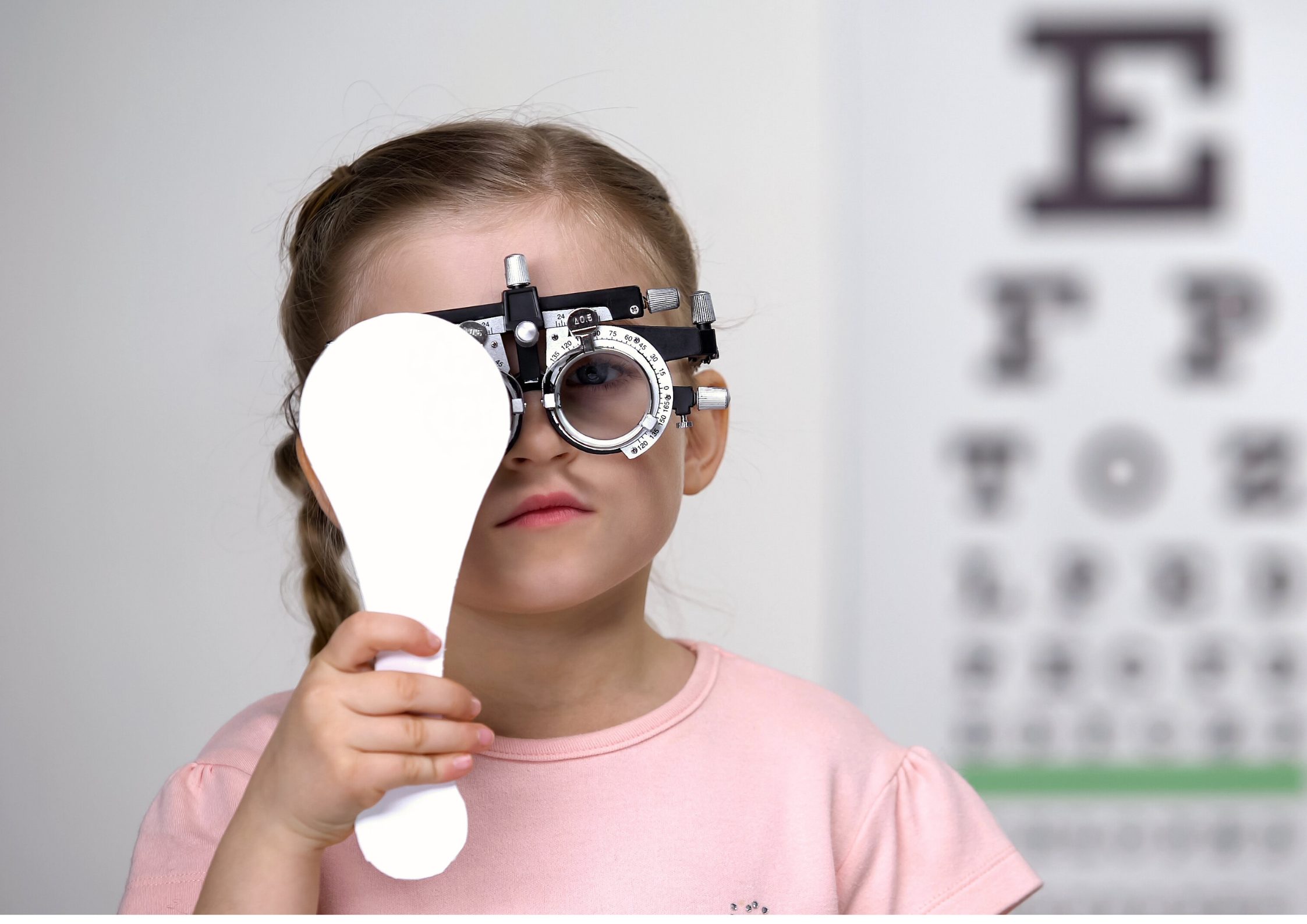
Image description: A young girl wearing special vision-testing glasses covers one eye while having her eyesight checked.
There are more tools available now than ever before to manage myopia and slow its progression. Here is how I approach treatment with my patients:
Prescription glasses are the simplest and most common option for correcting vision. In recent years, the eyecare industry has made real progress in this area. Depending on the child’s age and prescription, I may recommend:
Contact lenses for older children and adults. Contact lenses can offer more flexibility, especially for sport and outdoor activities.
Specialised spectacle lenses, such as MiYOSMART, which has been shown to slow the progression of myopia
Orthokeratology (Ortho-K), which involves wearing custom lenses overnight to temporarily reshape the cornea
Low-dose atropine eye drops which can help reduce the rate of myopia progression in children
These treatments do not cure myopia, but they can make a significant difference in how quickly it worsens.
What I recommend to families
In my experience, the most effective approach to managing myopia combines treatment with simple lifestyle changes. These include:
Encouraging children to spend at least two hours outside every day.
Taking regular breaks from screens and close-up work.
Scheduling routine eye exams to monitor any changes in vision.
Addressing symptoms early rather than waiting for them to get worse.
The sooner we act, the more options we have to protect vision and reduce long-term risks.
Final Thoughts
Myopia is common and manageable, but it is not something to ignore. As an optometrist, I want people to know that what starts out as blurred distance vision in childhood can, if left unmanaged, lead to serious eye health problems later in life. With the right support, we can manage myopia effectively and safeguard your vision for years to come.
Support and Empowerment
If you, or someone you know, is going through vision loss, Blind Low Vision NZ is here to help. We offer advice, resources, and practical support to help people live well with low or no vision. This includes mobility training with a white cane or guide dog, learning adaptive daily living skills, support with technology, and much more. To learn more about the support we can offer, call our Contact Centre on 0800 24 33 33.
Next :
Hmm, no more results were found, click here to return to all "News".