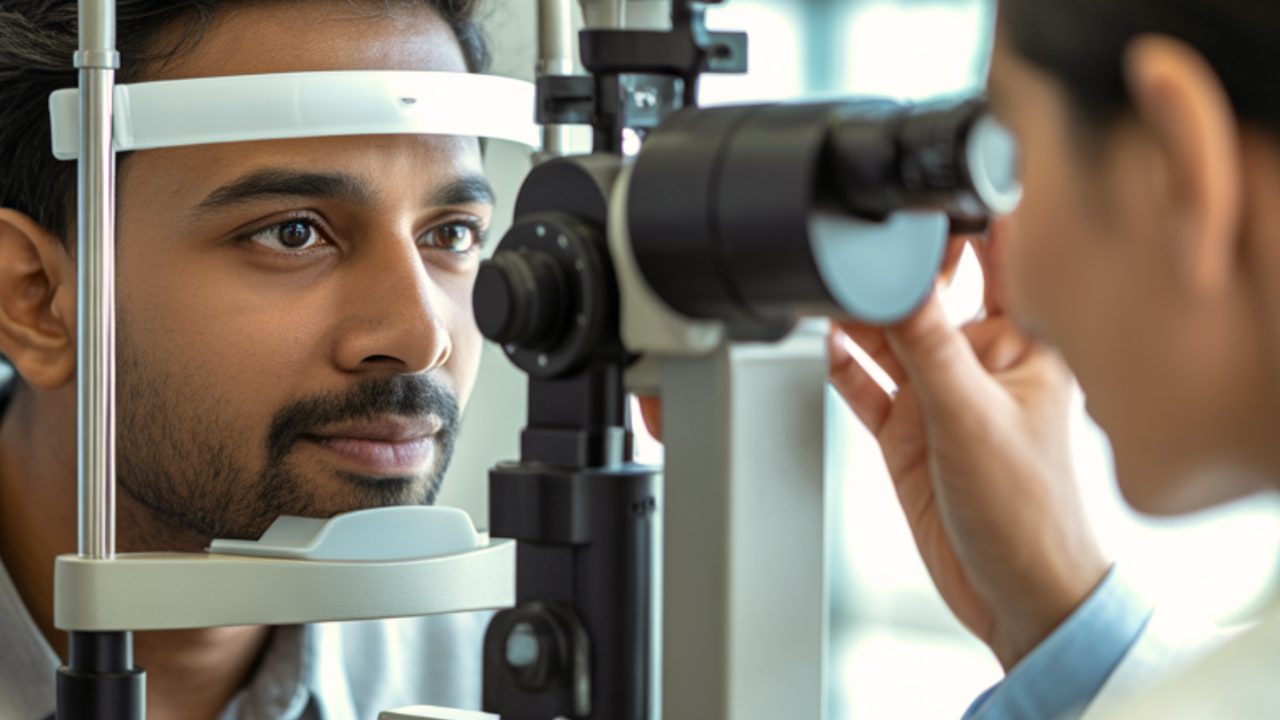
Image description: A person sits at an ophthalmic testing device while another an eye care professional, looks through the eyepiece to examine their eyes.
What is Diabetic Retinopathy?
Diabetic retinopathy (DR) is an eye condition that can lead to vision loss or blindness in people with diabetes. It occurs when the blood vessels in the retina, the light-sensitive tissue at the back of the eye, become damaged.
Diabetic retinopathy in NZ
Diabetic Retinopathy is the leading cause of vision loss and blindness among working-age New Zealanders. In New Zealand, about 291,000 people over the age of 15 live with diabetes, around 7% of the population. Of these, an estimated 20–25% develop DR, which is between 68,000 and 72,000 people.
Nearly everyone with Type 1 diabetes, and around 60% of those with Type 2, will experience some form of DR within 20 years of diagnosis. At Blind Low Vision NZ, 3.4% of clients are affected by the condition.
How often should I get my eyes checked if I have diabetes?
You should have a diabetes retinal screening at least every two years if you have diabetes. Retinal screenings are provided for free through the public health system for anyone with diabetes. If you are not enrolled in a diabetes retinal screening programme, talk to your GP who can refer you. These Retinal screenings are different than standard eye exams and are designed to pick up changes in your eyes before vision loss occurs. More frequent checks may be recommended depending on your other health conditions or if you already have changes at the back of your eyes.
Symptoms
The symptoms of DR often develop slowly and may not be noticeable at first. As the condition progresses, people may experience:
Blurred or fluctuating vision.
- Dark spots or floaters.
- Difficulty seeing at night.
- Or even sudden vision loss.
Regular eye checks are important, as early stages can be present without clear warning signs. Attending your scheduled retinal screening appointments helps you stay on top of your eye health – even before you notice any changes.
How is Diabetic Retinopathy, diagnosed?
Diabetic Retinopathy, is diagnosed during a comprehensive eye exam or diabetes retinal screening. The pupils (the black centre of your eye) will be dilated with eye drops so that either photographs can be taken or the eye specialist can check the back of your eye, the retina. These photographs are reviewed by a specialist. If necessary, they may ask you to come back again for further testing.
Prevention and Treatment
The good news is that most vision loss from DR can be prevented. Effective management of blood glucose levels and looking after your other health conditions like maintaining healthy blood pressure and cholesterol levels, regular exercise, not smoking, and attending your regular eye check-ups are key to preserving vision.
If you, or someone you know, may be experiencing symptoms of DR, Blind Low Vision NZ can support you on your vision loss journey. Find out how we can help by visiting the Our Services page on our website or by calling our Contact Centre on 0800 24 33 33.
For more information about diabetes and Diabetic Retinopathy, visit the Diabetes New Zealand website.
Next :
Hmm, no more results were found, click here to return to all "News".