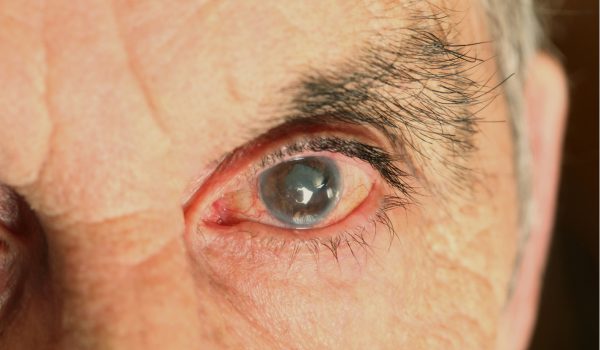
Image description: A close-up of a senior person’s eye with a cataract. The lens appears cloudy.
Written for Blind Low Vision NZ by Nicholas Willson, Optometrist, Specsavers Launceston, Tasmania.
Cataracts are a common eye condition where the normally clear lens of the eye becomes cloudy, leading to blurry or hazy vision. When I speak to patients about it, I compare it to a sheet of plastic that is left out in the sun and how it slowly becomes opaque over many years, thus blocking the light that passes through. Cataracts tend to develop gradually over time and are most often related to aging, though they can occur at any age. Some medication, medical conditions, or trauma can also cause cataracts to develop more quickly. Although rare, some babies are born with cataracts.
Cataracts are one of the most treatable causes of vision loss. With timely diagnosis and access to surgery, most people regain clear vision and continue living independently.
What are cataracts?
The lens sits just behind the coloured part of your eye (the iris) and focuses light onto the retina. A cataract forms when the lens becomes cloudy, blocking or scattering light and making it harder to see clearly. Cataracts can develop in one or both eyes. In practice I tend to find patients with cataracts normally tell me they experience difficulty reading in poor lighting while being relatively unaffected in other day-to-day activities.
What are the first signs of cataracts?
- Blurry or cloudy vision
- Glare or halos around lights, especially at night
- Faded colours or poor contrast
- Trouble reading or recognising faces
- Needing brighter light to see
- Frequent changes in your glasses prescription (optometrists will check for cataracts during your eye test)
You can read more about cataract symptoms on the Specsavers website.
Who is at risk of developing cataracts?
Cataracts are most common in older adults, but they can also be caused by:
- Eye injury or surgery – a traumatic eye injury could result in a rapid development of a cataract. Surgeries at the back of the eye could cause development or more rapid progression of a cataract (patients are usually told about this before having eye surgery and may opt for cataract surgery at the same time).
- Long-term use of corticosteroids (often the benefits of corticosteroids will outweigh the risk of developing cataracts but it’s another reason why it’s important to have regular eye tests to assess the development or progression of cataracts).
- Diabetes or other health conditions
- Smoking or excessive alcohol use
- Long term UV exposure
- Genetic factors or being born with cataracts
Diagnosis and treatment of cataracts
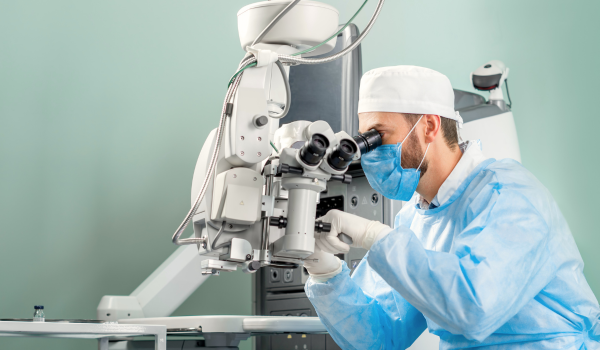
Image description: The back view of a surgeon performing cataract surgery using an operating microscope. The surgeon, wearing a mask, gloves, and gown, carefully focuses on the patient’s eye.
There are many types of cataracts based on which part of the lens is getting cloudy, however cataracts are simple for your local optometrist or ophthalmologist to diagnose using a slit lamp (a microscope that looks into the eyes).
In early stages, vision is relatively unaffected other than causing some changes to your prescription, which may be corrected with glasses. UV protection can help slow down the speed at which cataracts can progress, however doesn’t stop the progression.
When cataracts start to interfere with daily life, surgery to replace the cloudy lens with a clear artificial one is usually recommended. It’s one of the most commonly performed and successful procedures worldwide. I find that the age at which this happens can vary wildly, depending on the task performed by the patient and their awareness of blur. Here in Tasmania, which has a similar climate and outdoor lifestyle to our neighbouring Aotearoa New Zealand, I find most of my patients start to show symptoms of cataracts in their late 60’s and early 70’s with some of the biggest concerns being difficulty seeing signs while driving, and difficulty reading the paper even with their prescription reading glasses.
Low vision aids, brighter lighting, and contrast-enhancing tools can help people manage symptoms before surgery.
Living with cataracts
Most people with cataracts can be well supported by their optometrist while awaiting surgery. However, if everyday tasks are becoming harder, here are practical steps to make life easier while you wait for surgery or explore your options:
- Visit your optometrist regularly: They can provide tailored advice, ensure you have the best glasses prescription, and recommend vision aids like magnifiers to improve clarity.
- Enhance lighting: Use brighter bulbs in lamps, especially for reading or close work, and position adjustable lights directly behind you to focus on tasks.
- Boost contrast: Change the colour and contrast of items, for example putting a white cup on a dark-coloured mat, can make objects stand out more easily.
- Reduce glare: Wear a peaked hat and sunglasses outdoors
- Stay organised: Keep household layouts consistent, remove tripping hazards, and have a place for everything
- Embrace technology: Adjust phone or computer settings for larger fonts, high contrast, or try apps like Seeing AI for text or object recognition. Explore tech webinars for more tips on the Blind Low Vision NZ website.
Support and empowerment for people with cataracts
If cataract surgery is not an option for you right now, and cataracts are affecting your safety or independence, you may be eligible for support from Blind Low Vision NZ. Talk to your eye specialist or GP about a referral, or contact Blind Low Vision NZ at 0800 24 33 33 or email Info@BlindLowVision.org.nz.
Next :
Hmm, no more results were found, click here to return to all "News".