Kōrero: February 2026
Ma te korero, ka mohio, Ma te mohio, ka marama, Ma te marama, ka matau, Ma te matau, ka ora.
Through discussion comes awareness. Through awareness comes understanding. Through understanding comes knowledge. Through knowledge comes wellbeing.
This whakataukī reminds us that through open conversation and listening, we learn, understand, and grow together.
Formats
Kōrero is emailed to all our clients and members, Consumer Organisations, and Community Committees on the last Thursday of every month. Kōrero is also available in the following formats:
- This webpage is available easily at http://BlindLowVision.org.nz/korero.
- February 2026 Kōrero Word document.
- Alexa: Say “Alexa, open Blind Low Vision”. Alexa will then guide you through the main menu. Then, at any point, say “Alexa, magazines”; and then “Alexa, BLVNZ Korero”.
- TIS (Telephone Information Service): Call TIS m 3 4 1. Find your local TIS number on our Library Services webpage.
- Braille: Download the BRF file of February 2026 Korero or call our Contact Centre on 0800 24 33 33 if you would like to receive Kōrero in Braille.
Message from Andrea
Kia ora koutou, ,
I want to send a warm thank you to those of you who participated in our recent communications survey. Your contributions brought us a wide variety of voices – we rely on this data for our future strategy.
The RNZFB Board will receive the survey results at the March meeting. They will use the findings to help shape our strategic actions and communications approach. We value the work you did to facilitate this process, as it gives the Board a clear picture of how we can better support our community.
We also want to provide an opportunity for you to hear the results directly as the Board receives them. We invite all clients to attend the next Board meeting. This is a great space to connect with the Board and hear more about our direction.
Event details
- Date: Saturday 7 March.
- Time: 10am.
- Location: Online via Zoom, in person at the Blind Low Vision NZ Christchurch office.
Please RSVP by 1 March by emailing Diana, Board secretary on BoardSecretary@BlindLowVision.org.nz.
I look forward to having you there and working through these next steps with you.
Ngā mihi,
Andrea
Community Impact Series
Welcome back to our new Community Impact series where we share key highlights from the past year. Each instalment brings together the figures, stories, and moments that show how people in our community are connecting, learning, and moving through life with support from Blind Low Vision NZ.
These aren’t just numbers – they’re real experiences. They show how many people we’ve reached, the services they’ve used, and the difference support can make day to day. Through this series, we want to celebrate those moments and reflect on what they tell us about life in our community.
From sailing tall ships to smashing aces in Blind Tennis, our Sport & Leisure team isn’t just supporting clients – they’re helping people find connection, confidence, and a sense of belonging.
Russell, one of our Blind Tennis players, shared: “The Blind Tennis Group is where I feel like I belong. The people are incredible… From the very first time I met them, they didn’t feel like strangers at all. They’re so warm, kind, and motivating. They’ve become like family, pushing me to achieve more than I ever thought possible… Playing tennis has given me a new purpose… I feel like great things are happening to me now, and I am truly grateful to be a part of this.”
Stories like Russell’s show what’s possible when people have support. Whether through Sport and Leisure, Guide Dog Services, or other programmes, people are staying active, connected, and achieving things that matter to them. For the full Community Impact Report, available in a variety of formats, visit the Blind Low Vision NZ Annual Reports Page
Community Bulletin
Upcoming DSS online hui and funding changes
Disability Support Services (DSS) has announced changes to flexible funding that give people who are blind, deafblind, or have low vision more choice and control from April 2026. You can check the full changes to DSS flexible funding on their website at DisabilitySupport.govt.nz.
The aim is to remove detailed purchasing guidelines, including rules introduced in March 2024. If you already use flexible funding, you will be allocated a budget based on your spending over the past two years (June 2023 to June 2025). This means the full buying history will be considered, not just the period affected by the March 2024 restrictions.
For some people, this may mean budgets are lower than expected because part of the spending used to calculate budgets was affected by restricted purchasing rules.
At Blind Low Vision NZ, we want to know if these changes affect you. If your flexible funding appears to be less than it would have been without the restrictions, please email the Policy Advocacy team at PA@BlindLowVision.org.nz and tell us what is happening. If we see a pattern of people losing out on funding, we will raise this with the Minister and consider broader community advocacy. Your feedback helps shape a system that works fairly for people who rely on disability support services.
Upcoming Webinar Hui
Disability Support Services is hosting an online hui to talk about the upcoming changes to flexible funding. This is a good chance to hear directly from DSS, get your questions answered, and understand how these changes might affect your supports.
When: Wednesday 11 March, 10am.
Where: Online (Zoom link will be sent to registered participants).
To register, please phone 0800 227 363 and ask for the Information Services Coordinator or email information@drct.co.nz.
New Zealand Disability Strategy 2026–30: summary of submissions now in accessible formats
Whaikaha The Ministry of Disabled people sought feedback on the draft New Zealand Disability Strategy 2026–30 during August and September 2025. The Summary of Submissions report has an analysis of all feedback received on all sections of the draft strategy.
Accessible formats
- The summary of submissions is available in alternate formats to support different access needs. You can choose the option that works best for you, including audio, Braille or large print. All accessible formats of the New Zealand Disability Strategy documents are available on the Whaikaha website at at whaikaha.govt.nz.
If you would like support or have any questions, you can contact Whaikaha by email at contact@whaikaha.govt.nz or phone 0800 942 452.
Help shape the future of Canterbury
The Canterbury Regional Council (Environment Canterbury) is inviting the public to provide feedback on the draft Annual Plan Mahere ā Tau from 27 February.
Environment Canterbury remains committed to its Long-Term Plan 2024–34, and the work proposed in the coming year aligns closely with that plan. You can find out more about the 2024-34 Long Term Plan on the Council’s website.
The regional council’s focus for 2026/27 is on keeping rates increases as low as possible while continuing to deliver across its three core services: Environmental Regulation and Protection, Community Preparedness and Response to Hazards, and Public Transport.
If you live in the Canterbury region, you can share your views with the Council on what you think about its plans for the coming year.
It is also your chance to share what matters most to you to help the Council shape its long-term plans.
From 27 February, you can share your feedback at ecan.govt.nz/annualplan26.
Please note this requires registering or signing into an Environment Canterbury account. Feedback closes at 11:59pm on 31 March. Any questions, please email HaveYourSay@ecan.govt.nz or phone 0800 324 636.
Public transport woes
Over the Christmas and New Year period, we were disheartened to receive emails and alerts that many have had issues with public transport, mostly with buses. Two of the main ongoing issues are: 1) buses not stopping for passengers waiting at the bus stop; and 2) guide dogs not being allowed on the bus.
Here’s an RNZ article about Bus Etiquette: Do you need to wave to the driver to get them to stop?
Buses have been reported driving straight past people, saying those at the stop did not signal that they wanted the bus to stop. Bus companies say this should not happen. Their policy states that drivers must stop if they can see people waiting, even if no one waves. So why does driver behaviour not match company policy?
There has also been confusion from bus drivers around if guide dogs need to be muzzled, the same way travelling with pet dogs is required. One incident was witnessed by a Blind Low Vision NZ staff member. A volunteer puppy raiser was trying to board a bus with their guide-dog-in-training, and the driver refused to let them on. The staff member intervened to tell the driver that guide dogs have a different status.
The Policy and Advocacy team have contacted both Auckland Transport and Christchurch Metro about these issues.
We are pleased to say that Auckland Transport is taking the issue seriously and have reached out to discuss it. Auckland Transport regularly engages with Blind Low Vision NZ around how they can be more accessible to our community, and we are in ongoing discussions around how to address this.
Strategic complaining
Before contacting the Blind Low Vision NZ Policy and Advocacy team for support, always make sure to contact the public transport company so that your complaint is logged in their system. We will be better able to support you in that way.
Auckland Transport has created a new system for complaints that come in through their call centre. They will be using AI to collate complaints containing key words such as ‘guide dog’, ‘blind’, and ‘accessibility’. Our team will be working with them to support their learnings, training and supports to ensure issues do not occur.
You can reach Auckland Transport’s call centre on 09 366 6400.
For all other transport regions, you must put your concern and compliant in writing first. If you call and make a complaint, ask for the case number. This will ensure that your compliant has been recorded in the system. The Human Rights Commission and other such services will always ask if you have complained to the provider first.
Contact Metlink Services on 0800 801 700 or via submitting Metlink Online Feedback Form on the Metlink website. You can also Contact Metro Christchurch on 03 366 88 55 or at metro@ecan.govt.nz.
For regional services please contact your local council for information.
Staying safe online series
The ‘Staying safe online’ series shares simple, practical tips to help you spot warning signs, protect your information, and feel more confident online.
Episode Six: Staying Smart and safe on social media and AI
Social media and artificial intelligence (AI) continue to grow, and they will affect our lives in big ways. You can benefit from learning how to use these tools safely and thoughtfully. There are simple steps we can take to help our community stay healthy, safe, and well-informed.
1. Prioritise in-person relationships
Humans need real-life connections to stay healthy. AI chatbots can feel like friends, but they are no substitute for people in your life. Spending time with friends, family, and communities outside of screen time is very important.
2. Watch out for misinformation
Not everything online is true. Social media and AI can spread false information quickly, including health advice. Seek guidance, check facts, and talk to a support person or professional you trust.
3. Be mindful of data collection
Many apps collect data about users for ads or other purposes. Seek to understand what information apps collect and who is benefiting from it. Review privacy settings and choose apps with strong protections. Terms and conditions often come in small print. Use your screen reader or voice-over technology to check carefully rather than agreeing without reading.
4. Use AI thoughtfully
AI can help with brainstorming or learning, but it shouldn’t replace real interactions or independent thinking. Question AI-generated content and treat it as a tool, not a source of truth.
5. Manage screen time
Our brains are sensitive to social rewards, which makes social media feel addictive. Limiting screen time helps prevent fatigue, stress, and disrupted sleep. Make sure to balance screen time with sport, leisure, and other offline activities.
For more tips on staying safe on social media, visit the News Literacy Project website to read their guide.
While it’s aimed at teens, the advice is useful for everyone.
Youth Council – expressions of interest
Are you 16–30 and a Blind Low Vision NZ client? We’re forming a Youth Council, and this is your chance to help shape services, events, and opportunities that matter to young people with low or no vision.
You could share thoughts on social activities, technology support, workshops, advocacy, and ways to connect with others.
The Council also helps us test new ideas, give feedback on projects, and make sure our work reflects what young people really need. You’ll meet other young people from across Aotearoa and be part of a supportive, fun group.
The Council will meet four times a year, with the first meeting in March 2026. We’re looking for enthusiastic young people who want to make a difference.
To express your interest, email CommunityAndInclusion@BlindLowVision.org.nz or call our Contact Centre on 0800 24 33 33. We’ll get back to you with more details about what’s involved and the next steps in the coming weeks.
Paving the way – a new journey out of the shadows of the past
On 18 September 2025 the Royal New Zealand Foundation of the Blind, in accordance with Recommendation 3d. of Whanaketia – Whanaketia – Through pain and trauma, from darkness to light the final report from the Royal Commission of Inquiry into Abuse in state and Faith-based Care, apologised formally for the harm it did to children and adults in its care between 1950 and 1999. A recording of the apology hui, held on 18 September in Parnell, is available on the Blind Low Vision NZ YouTube channel.
For some attendees this was closure, relief or simply recognition. For some Blind Low Vision NZ members who survived abuse, however, it represented both the culmination of a year’s work and the beginning of a new and challenging journey.
Since the release of the report in 2024 and following an email from then RNZFB Board Chair, Clive Lansink, Blind Low Vision NZ Chief Executive Andrea Midgen invited contact from survivors. Eventually, four would become members of the Royal New Zealand Foundation for the Blind (RNZFB) Redress Group: Kylee Maloney, Dr Pam MacNeill, Dr Don McLaren and Stephanie (Stephie) Birkhead.
You can read the full article from Kylee by visiting the RNZFB Redress Group page of the Blind Low Vision NZ website.
From Fear to Liberty: Why we’re paying it forward
When Fraser Alexander first came to Blind Low Vision NZ in 1998, he faced an inherited retinal degenerative condition. In his own words, “curiosity, ignorance, and fear” defined that time.
“The condition challenged my ability to read and write,” he recalls. “But through Blind Low Vision NZ, I discovered solutions that transformed limitation into possibility.”
This went beyond seeing a screen; it meant expanding what was possible. The first time he used magnification software, reading became possible again on his own terms. Over the years, as he adopted screen readers and smart glasses, that feeling of dependence faded, replaced by “independence, liberty, and new capabilities.”
Fraser has served as a director of the RNZFB Board and remains an active volunteer, but his most lasting contribution will be the gift he and his partner, Christina, have left in their Will.
Fraser knows the organisation from the inside out. He has experienced firsthand that while the team works incredibly hard, resources remain finite.
“Government funding alone will never be enough to unlock the full potential of people who are blind, deafblind, or have low vision,” he explains. ”People who are blind or have low vision, and the wider community, must take collective responsibility to live the lives they choose.”
For Fraser, a bequest ensures the next generation has the same access to the tools that changed his life.
“If our gifts can help change even a few lives – restoring confidence, determination, and self-respect – then we will feel they matter,” he says. ”We want to ensure sight loss does not unnecessarily compromise the dignity, independence, and life outcomes of any New Zealander.”
Will you join Fraser in creating a future of opportunity?
You don’t need to leave a fortune to make a lasting difference. By dedicating even 1%, 2%, or 5% of your estate after your loved ones are provided for, you ensure future generations can face the world with confidence.
Blind Low Vision NZ has partnered with Safewill to offer Clients, Supporters and their families a free online Will between 9 – 30 March. You can visit our website to learn more about leaving a gift in your Will. To find out more about this offer, or if you have any questions, please contact Joanne Eve, our Relationships Manager Legacies on 022 0159 216 or email Legacies@BlindLowVision.org.nz.Thank you for taking the time to consider supporting our community. Your thoughtfulness means a great deal to us.
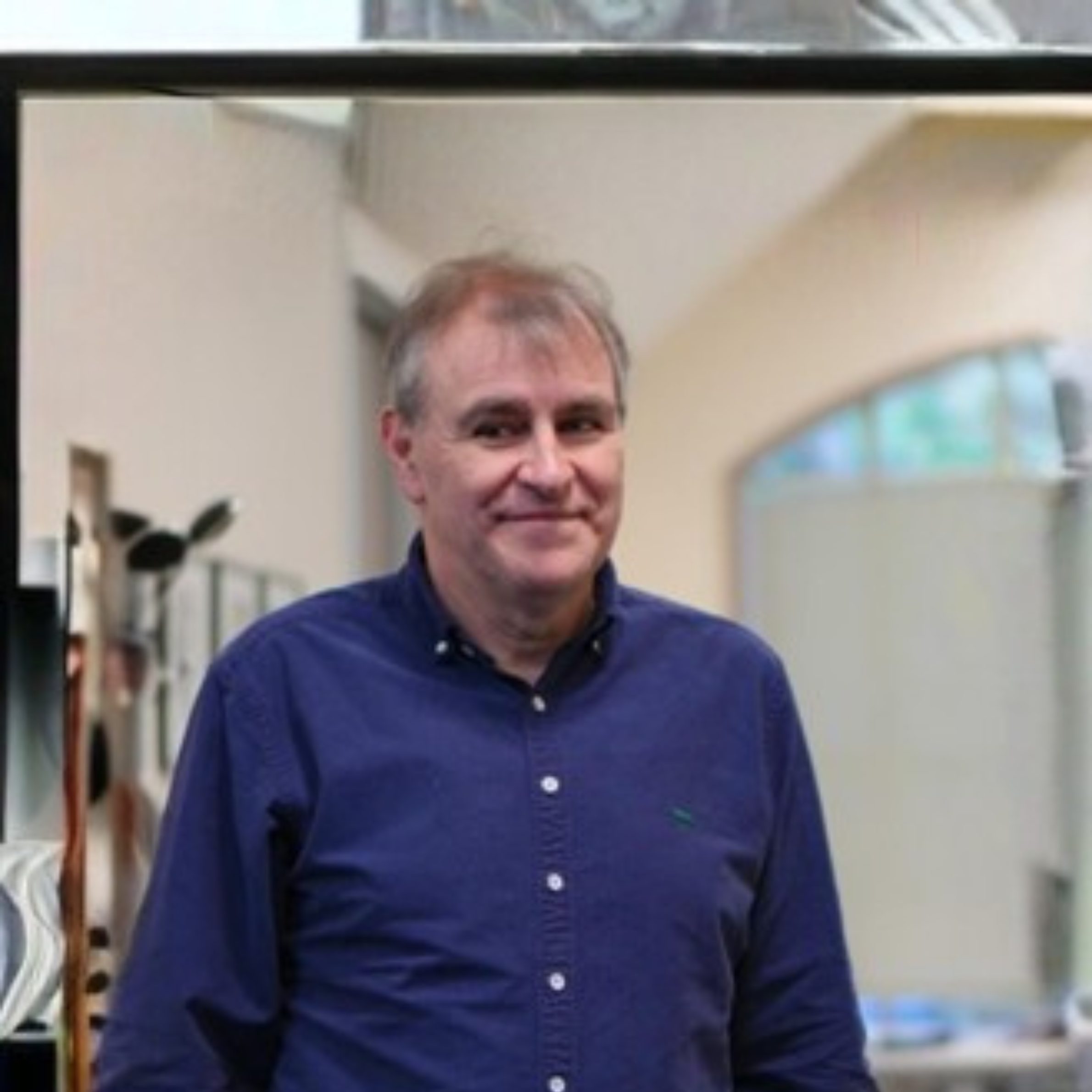
Image description: Fraser Alexander in an office at Auckland University.
FAQs
- Why are you asking clients to donate? We believe in our community, and we’ve heard from many clients who want a way to give back. We’re creating this program to offer a clear and simple opportunity for those who are in a position to contribute and wish to do so.
- Will the services I receive change if I don’t donate? Absolutely not. Your access to our services and the quality of support you receive will never be affected by whether or not you choose to donate. Our services are here for you, unconditionally.
- How will my donation be used? Your gift will go directly toward funding the core services you know and experience every day. It will help us provide support to more people, develop new programs, and ensure we are here for our community long into the future.
- Is my donation confidential? Yes. Your decision to donate and any financial details are kept strictly confidential within our fundraising team. This information is not shared with the staff who provide your services.
- How can I make a gift? Thank you for considering it! You can become a Regular Giver, make a one-time donation, or you may want to consider leaving a gift in your Will. Contact our friendly Supporter Care team at SupporterCare@BindLowVision.org.nz or call 0800 DONATE, that’s 0800 366 283.
My Business Starter Programme
My Business Starter Programme is run by the Disability Business Network in partnership with CCS Disability Action. The programme is led by people who believe self-employment can be a strong option for disabled people.
The nine-week programme is free, and can be joined from anywhere in New Zealand. You just need Wi-Fi and the ability to use Zoom.
The next programme starts on 28 April 2026, with limited spaces available.
To find out more, ask questions, or register your interest, email Support@CCSDisabilityAction.org.nz or phone/text 027 213 1820.
You can read an article about the My Business programme on the SunLive website at SunLive.co.nz. You can also listen to an interview on Otago Access Radio to hear how the programme began at accessmedia.nz.
Open Doors Internship in Hospitality
People who are blind, deafblind, or have low vision can step into the world of hospitality through the Open Doors Internship, run by Hind Management with placements at Sudima Hotels. This six-week programme gives hands-on experience in hotel departments such as Front Desk, Housekeeping, or Food and Beverage. You’ll shadow team members, learn practical skills, and build confidence for future work.
The internships usually take place mid-year at hotels in Auckland, Christchurch, Queenstown, Kaikōura, and Rotorua. The next round is expected after March 2026.
If you’d like to express your interest or learn more, email careers@SudimaHotels.com at HindManagement.com.
For more information about this program and other career opportunities, visit the Hind Management website at HindManagement.com.
ReVision podcast – exploring the world without sight with Chantelle Griffiths
In the latest episode of the ReVision podcast, host Sam Smith sits down with Chantelle Griffiths, a world traveller, tactile tech innovator, Winston Churchill Fellowship winner and more recently, a Blind Low Vision NZ Braille Proofreader. Chantelle shares how she navigates cities, creates Braille-inspired puzzle books, and makes reading and play more accessible for everyone. Join Sam and Chantelle as they explore her adventures, breakthroughs in tactile design, and the spirit that drives her to keep discovering the world, one touch at a time. Listen to Sam Smith chat with world traveller and tactile tech innovator Chantelle Griffiths on Buzzsprout.
Tune into this week’s accessible TV programmes
How to access Audio Descriptions: In general, Audio Description (AD) can be switched on or off by pressing the AD button on a TV Remote Control. However, some TVs have a different label on the remote button, and others require AD to be switched on or off via the menu.
You’ll find listings of audio described programmes for this week on the Able website or via TIS Menu 6607.
Noticeboard
The Pearson Fund is here to help
Still enjoying summer, but finding the cost of equipment challenging? The Pearson Fund might be able to help with the cost of tools that support your daily independence. It’s worth checking if you meet the criteria.
Learn more about the Pearson Fund and see how to apply on the Blind Low Vision NZ website.
3G networks are shutting down
From late 2025 into early 2026, mobile companies in New Zealand began turning off their 3G networks. This includes Spark, One NZ, and 2degrees. This may affect people using older phones or safety devices that rely on 3G. These devices might stop working and may not be able to make emergency 111 calls.
You may be more affected if you:
- Use an older phone or SIM card.
- Rely on health or safety equipment.
- Live in a rural area.
- Find it hard to upgrade your device.
3G shutdown status:
- 2degrees– Shutdown is complete. 3G is now off.
- One NZ– Phased shutdown is underway, completing nationwide by 31 March 2026.
- Spark– Planned shutdown by 31 March 2026.
- Other providers– Many smaller mobile companies use these networks. Their 3G shutdown will follow the same dates as the main network they rely on.
Next steps:
- Send a free text to 550 with the word 3G. You’ll get a reply telling you if your phone will still work. (Please note: if your phone supports 4G or 5G but you have an old SIM card, the message may say your phone will work. However, you will still need to replace your SIM card for your phone to work properly.)
- Visit the 3G Shutdown NZ website 3G for clear information.
- Recycle old devices through RE:MOBILE. It’s free and there are over 500 drop-off points.(You can get in touch with RE:MOBILE via email remobile@tcf.org.nz or phone 09 475 0203) or phone 09 475 0203)
If you need help or have questions, you can email info@tcf.co.nz or visit the 3G Shutdown NZ website. Be aware that scammers may try to take advantage by pretending to offer help with the 3G shutdown. Always check with your provider before sharing any personal information.
Discover the Parnell Community Hub
Last year, we opened the Community Hub next to our Parnell office in Auckland.
The Hub is a purpose-built space, free to use for all Blind Low Vision NZ members and clients. Every detail has been thoughtfully designed to create a welcoming and accessible environment for everyone in our community.
This space is more than just a venue. It is a community-led place where people come together. You can use it for group meetings, workshops, or shared learning. It is also a place to connect, make friends, and feel part of something.
The Hub has a meeting room, a flexible multi-purpose room, and an open-plan area. You can also book the whole space for exclusive use. Whether you are planning a small catch-up or a larger event, the Hub can adapt to your needs.
One recent gathering was from a blind mums group called Hands On Parenting. A small group of members and their families met near the end of last year. They shared parenting stories, tips, and honest thoughts about raising children as parents who are blind or have low vision. One member, Jamie, shared their experience:
“The space is really cool. It gives us a comfortable place to meet and talk. It also takes away the stress of finding a venue. That can be hard when you have guide dogs, babies, toddlers, and white cane users. Public places can feel chaotic with little ones. This space was perfect for us.”
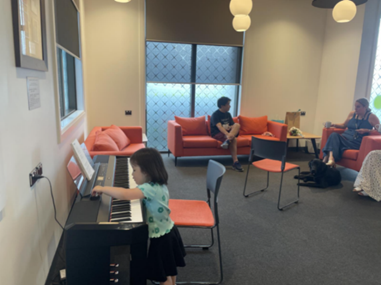
Image Description: From last year’s Blind Mums group gathering. An open space with a digital piano on the left. A three-year-old girl, the daughter of a member, sits at the piano. In the background, a man sits on a bright orange sofa, talking with a woman on the right.
The Community Hub is here for you, even if you are travelling from another city. If you want a space to connect, learn, or bring people together, this is a place designed with you in mind.
For more information about accessing the Hub, please call our Contact Centre on 0800 24 33 33 or email ParnellAdmin@BlindLowVision.org.nz.
Thumbs Up
Launch of IDI Research Project “Shining a Light on Blindness”
On Friday 27 February, the Blind Low Vision NZ Policy and Advocacy Team will launch the report Shining a Light on Blindness at an Auckland Launch event. On Tuesday 3 March, a similar event will be held in Wellington.
The IDI Research Project seeks to describe life outcomes for people of working age with visual impairments and compare them against the general population.
The findings from this report show significant disparities in life outcomes for people with visual impairments in New Zealand, putting numbers to the stories our community has been telling.
The results from this report will help inform policy makers on creating policy to close the gaps. We will be able to create targeted programmes, and track the results over time.
The full report as well as a summary, will be available in multiple formats to download from the Blind Low Vision NZ website from 27 February. If you have any questions, please call our Contact Centre on 0800 24 33 33 or email PA@BlindLowVision.org.nz.
Join our Careers Network and share your story
Would you like to be part of Blind Low Vision NZ’s Careers Network? This online initiative is designed to inspire and support people living with blindness or low vision to explore a wide range of career possibilities.
The Careers Network aims to showcase real people from different industries, highlight diverse career journeys, and create a space where others can find inspiration and guidance. If you’re keen, we’d love to feature you with a short bio on the Careers Network landing page.
We are looking for:
- People who are blind or have low vision and work in any type of job or industry.
- People who are happy to act as a sounding board for others considering similar work.
- People who are willing to share their story to show what’s possible.
For privacy reasons, we won’t include personal contact details, and only your first name will appear on the site. If someone wants to connect with you, they can reach out via a general enquiry form monitored by our team.
Please send your written bio to CommunityAndInclusion@BlindLowVision.org.nz,including the following information in your narrative and keep it to around 200 words:
- A bit about yourself and your eye condition or level of vision.
- What you studied or trained in after high school (if applicable).
- Why you chose that path.
- Why you’d recommend this career to someone in the blind and low vision community considering a similar path.
- Your official job title and your industry.
Should you have any questions please contact the project lead Sarah Mitchell directly on 021 212 3449 or email SMitchell@BlindLowVision.org.nz
We’re really looking forward to building this network together.
Inclusive movement and independence: ICEVI’s January issue
We are excited to share that Blind Low Vision NZ contributed content to the latest issue of The Educator (Volume 40, Issue 1, January 2026), published by the International Council for Education of People with Visual Impairment (ICEVI).
The Educator is a biannual publication that connects knowledge, practice and people across the world. It shares articles, case studies, stories and resources that help improve inclusive education and support for learners with visual impairment.
Their January issue focuses on physical activity, highlighting orientation and mobility, adapted sport and recreation, and how movement can support independence, learning, and well-being for people who are blind or have low vision. Our Sport & Leisure Development Manager, Mark McLaughlin, contributes an article from our Community Impact Report 2025, Comprehensive health and wellness through the Sport and Leisure team / Matawhānui hauora me te oranga nā roto i te tīma Hākinakina me te Rēhia.
You can find the full issue on the ICEVI website with Mark’s article starting on page 27.
If you have any questions about sport and leisure activities, you can contact your local sport and leisure advisor by calling our Contact Centre on 0800 24 33 33 or emailing SportAndLeisure@BlindLowVision.org.nz.
Telefriend: Here to Support You
This is your space to share bite-sized learnings from your experiences as someone who is blind, deafblind, or has low vision. Maybe you’ve got a new gadget you’re loving, or you’re an Excel expert with great tips on accessibility features. Whatever it is, your knowledge could help someone else. Whether it’s a tech trick, a daily living hack, or anything in between, we want to hear from you! Your insights could make a big difference to others in the community.
If you’d like to submit an idea, please email communications@blindlowvision.org.nz.
Tell me about it
This is your space to share bite-sized learnings from your experiences as someone who is blind, deafblind, or has low vision. Maybe you’ve got a new gadget you’re loving, or you’re an Excel expert with great tips on accessibility features. Whatever it is, your knowledge could help someone else. Whether it’s a tech trick, a daily living hack, or anything in between, we want to hear from you! Your insights could make a big difference to others in the community.
If you’d like to submit an idea, please email Communications@BlindLowVision.org.nz.
Upcoming Events
Work Ready Webinar: Employment and Youth Pathways
Tuesday 10 March at 9am.
If you’re thinking about work, training, or study, this Work Ready webinar is a great place to start.
The Employment and Youth Pathways service supports people to move into meaningful and sustainable employment, or to make a successful transition into further study, training, or community life.
Join Sarah Mitchell, Head of Employment and Youth Pathways, for an informative session on the support available and how the team can work with you.
This one-hour webinar will be delivered live on Zoom. A recording will also be available after the session.
Topics include:
- Support available for study and employment pathways.
- External services for supported employment.
- Support grants you may be eligible for – visit our support grants page.
- Gallup CliftonStrengths.
- The Blind Low Vision NZ Graduate Programme.
- Individualised professional development support.
Join the next Work Ready Webinar via this Zoom link on Tuesday 10 March, 9am.
Work Ready Webinar Recordings & Resources
Explore a series of standout webinars covering topics from cutting-edge accessible technology to vital support funds. Listen to Work Ready Webinar Recordings at your leisure on the Blind Low Vision NZ website.
Youth Week 2026 – expression of interest
Youth Week runs from 18–24 May across Aotearoa. It celebrates young people and the role they play in their communities. This year’s theme is Taringa Whakarongo! Ki te reo ngā taiohi – Our Voices Matter! It is all about listening to young people and valuing what they say.
We are creating a Youth Spotlight series to share stories from young clients aged 25 and under. You might be studying, working, playing sport, volunteering, or trying something new. You might be finding your own ways to move past barriers linked to blindness or low vision. Your story could inspire others.
If you would like to take part, please email CommunityAndInclusion@BlindLowVision.org.nz to express your interest.
Ask Me Anything
You’ve told us that better communication matters — and we’ve heard you. This is your direct line to our Chief Executive, Andrea Midgen, and the RNZFB Board (BlindLowVision.org.nz).
Whether it is about the services we provide, the direction of the organisation, or ideas for the future, we want to hear from you. Your voice helps us grow and improve.
Submit your question anonymously or include your details for a direct response. It’s quick and easy! Access the Ask Me Anything form via Microsoft Forms. Alternatively, you can call our friendly Contact Centre team on 0800 24 33 33 to submit your question.
News from the Royal New Zealand Foundation of The Blind (RNZFB) Board
Update from the Board Chair
RNZFB Board of Directors meeting
The next RNZFB Board of Directors Meeting is scheduled for Saturday 7 March 2026 in Christchurch. This meeting will be held at the Blind Low Vision NZ Christchurch office. If you would like to attend this meeting as an observer, please contact the Board Secretary BoardSecretary@BlindLowVision.org.nzor phone the Contact Centre on 0800 24 33 33.
- In accordance with the RNZFB Constitution, members and members of the public are welcome to observe at RNZFB Board Meetings in person, via teleconference or online, with the permission of the Chair.
The minutes of the 21 November Board meeting are available. If you require a copy of any of our minutes, please email the Board Secretary
BoardSecretary@BlindLowVision.org.nz or phone the Contact Centre on 0800 24 33 33. The Board meeting minutes are also available on the Telephone Information Service (TIS), option 3, 1, 3.
Independent Review of the RNZFB Constitution
The review of the RNZFB Constitution, led by Simpson Grierson, is in its final stages, with a recommendation paper expected at the May Board meeting.
2026 Board Retreat
Following the joint strategic planning session between the Board, Chief Executive, and Blind Low Vision NZ Executive Leadership Team on Friday 30 January, in Parnell, the Board commenced 2026 with its annual retreat. This retreat, also held in Parnell, provided a great opportunity for strategic planning and setting work goals for the year ahead. A key focus during this year’s retreat was Future Focused Governance, what that looks like and how our Board effectively governs for now while considering future generations. We look forward to continuing that journey in the year ahead and as we start thinking about the next Strategic Plan.
Chair’s Newsletter
You can check it out at the Blind Low Vision NZ Governance webpage and on the Telephone Information Service at option 3, 1, 1.
Donna McCaskill
RNZFB Board Chair
In the News
- Meet Steffanie Holmes: a blind New Zealand author
Read an interview with Steffanie Holmes, a New Zealand bestselling author, as she talks about her spooky romance A Grave Mistake.
Job Opportunities at Blind Low Vision NZ
For the latest job opportunities at Blind Low Vision NZ, go to the Blind Low Vision NZ Careers website or call TIS m 3 4 6.
Ka kite anō
Please let us know what you think of Kōrero. We welcome suggestions for what you would like us to include and any tips or stories you would like to share with the community. Get in touch on 0800 24 33 33 or via Communications@BlindLowVision.org.nz.
Did you know that you can request Kōrero in Braille? Call our Contact Centre on 0800 24 33 33 if you would like to receive Kōrero in this format.