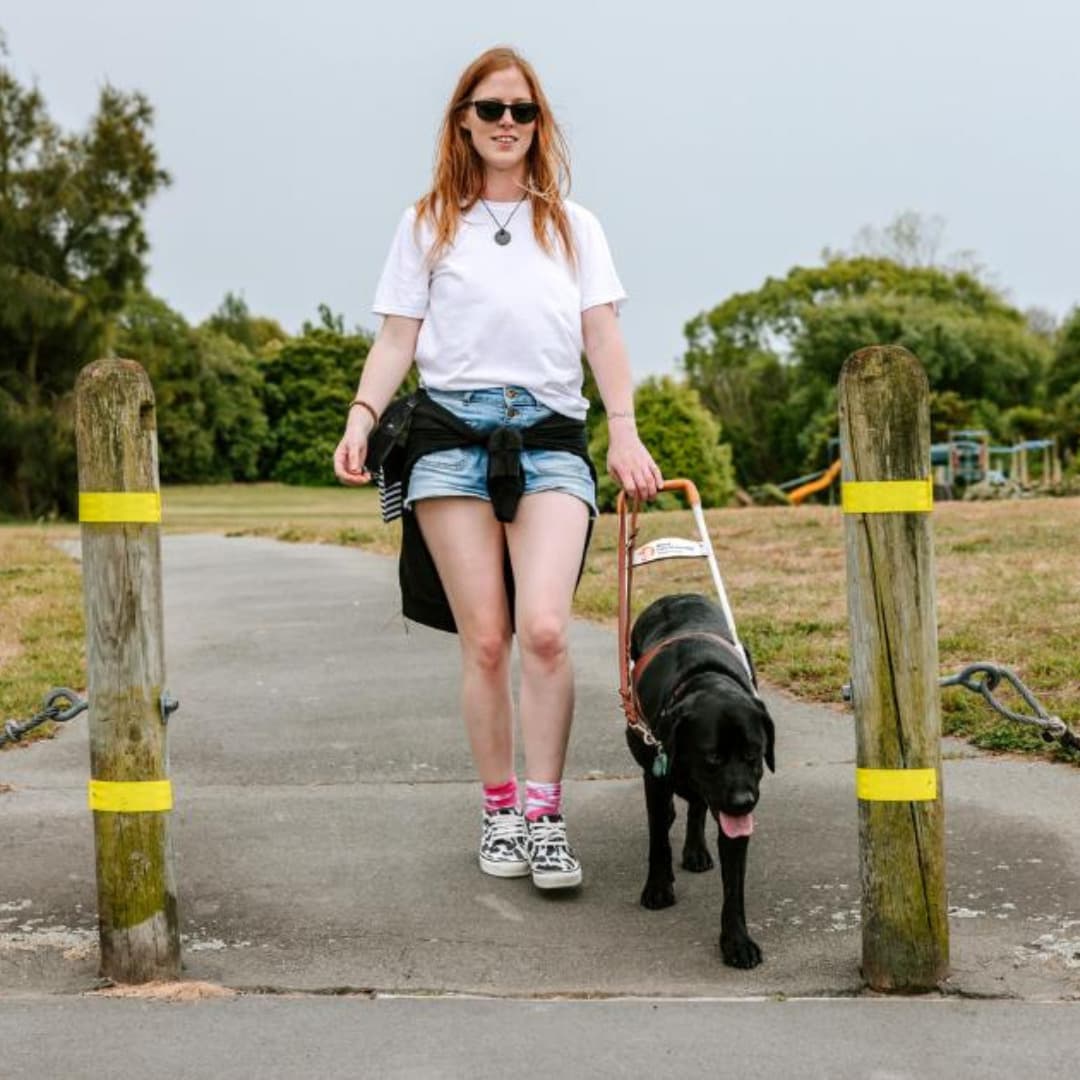
There are many myths and assumptions about guide dogs. They can sometimes stop people from finding out whether guide dog mobility could be right for them.
You might have heard that you need to be totally blind, that there is a long wait for a guide dog, or that you are too old.
Let’s explore some common guide dog myths and the reality behind them.
Guide dog eligibility, age and wait times
Myth: There is a two-year wait for a guide dog
Reality
The current wait time for a guide dog is around seven months.
Wait times can vary depending on your circumstances and whether you have specific requirements. But they can be much shorter than you might expect.
If you’re curious about guide dog mobility, you don’t need to make a decision straight away. You can start by exploring whether it could be right for you.
Could a guide dog be right for you?
Our short self-assessment quiz can help you think about your mobility needs, goals and lifestyle. It’s a simple way to learn more about guide dog mobility before deciding what you’d like to do next.
Take the guide dog self-assessment quiz.
If you’d like to talk to someone after completing the quiz, our Guide Dog team can help you understand your options and the next steps.
Myth: You need to be totally blind to get a guide dog
Reality
You do not need to be totally blind to explore guide dog mobility.
During the application and assessment process, our Guide Dog team considers your vision, mobility needs, travel goals and lifestyle. They look at whether guide dog mobility is right for you and what type of guide dog could best meet your needs.
You might be surprised to learn that you could be eligible. Having a conversation with our Guide Dog team can help you understand your options.
Myth: Someone else needs a guide dog more than I do
Reality
You don’t need to decide whether someone else needs a guide dog more than you do.
Everyone’s circumstances are different. Guide dog mobility is about finding the right mobility solution for your needs, goals and lifestyle.
If you think a guide dog could help you travel more confidently and independently, you can explore the option with our Guide Dog team.
Myth: I am too old to get a guide dog
Reality
There is no age that automatically rules you out.
Our Guide Dog team considers your individual circumstances, mobility needs and ability to work safely and effectively with a guide dog.
People at different ages and stages of life partner with guide dogs. What matters is whether guide dog mobility is the right fit for you.
Life with a guide dog
A guide dog is a working partner, but they are also a dog. Like all dogs, they need time to play, exercise, relax and enjoy life.
Myth: Guide dogs are always working
Reality
Guide dogs are not working all the time.
They learn the difference between being in harness and working, and being out of harness and relaxing.
When they are off duty, guide dogs have time for exercise, play, affection and rest. Their working role is just one part of their life.
Myth: Guide dogs don’t get to enjoy being dogs
Reality
Guide dogs absolutely get to be dogs.
They have opportunities to play, exercise, explore different environments and enjoy appropriate activities when they are off duty.
Their health, welfare and wellbeing are important throughout their lives. They need time to relax, play and simply enjoy being a dog.
Myth: Guide dogs are always Labradors
Reality
Labradors are one of the breeds commonly trained as guide dogs, but they are not the only ones used worldwide.
At Blind Low Vision NZ, we work with Labradors and Labrador Retriever crosses.
Each dog has its own personality, strengths and needs. During training, we look at whether a dog has the qualities needed to become a guide dog, including confidence, focus, temperament and a willingness to work with people.
The aim is to match each guide dog with a person who has the right workload, lifestyle, and goals. It is the partnership that matters most.
Could guide dog mobility be right for you?
You might have questions about guide dog mobility but assume it isn’t an option for you.
You might think you are too old, that you don’t have enough vision loss, or that the wait will be too long.
These assumptions can stop you from finding out what is possible.
If you are curious about guide dog mobility, talking to our Guide Dog team can help you understand your options and decide what is right for you.
You don’t have to decide if a guide dog is right for you straight away. The first step can simply be finding out more.
Frequently asked questions about guide dogs
Do you have to be totally blind to get a guide dog?
No. You do not have to be totally blind to explore guide dog mobility. Your vision, mobility needs, travel goals and lifestyle are considered as part of the application and assessment process.
How long does it take to get a guide dog?
The current wait time is around seven months. Wait times can vary depending on your circumstances and whether you have specific requirements.
Is there an age limit for getting a guide dog?
There is no age that automatically rules you out. The Guide Dog team considers your individual circumstances, mobility needs and ability to work safely and effectively with a guide dog.
Do guide dogs get time off?
Yes. Guide dogs are not working all the time. They have time for exercise, play, affection and rest when they are off duty.
How do I find out if I am eligible for a guide dog?
The best place to start is by talking to the Blind Low Vision NZ Guide Dog team. They can help you understand whether guide dog mobility could be right for you and explain the next steps.
Next :
Hmm, no more results were found, click here to return to all "Our Stories".